|
ISRAELITISH CHURCH
IN THE ISRAELITISH CHURCH THE DECALOGUE WAS HOLINESS ITSELF.
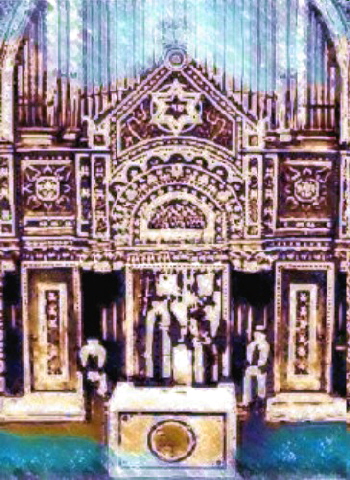 The commandments of the Decalogue were the first fruits of the Word and therefore the first fruits of the church about to be established with the Israelitish nation, and as they were in a brief summary the complex of all things of religion, whereby there is a conjunction of God with man and of man with God, they were so holy that nothing could be holier. That they were most holy is clearly manifest from the following facts: That Jehovah Himself, the Lord, descended upon Mount Sinai in fire, accompanied by angels, and promulgated these laws therefrom by a living voice [and that the people were three days preparing themselves to see and hear], and that bounds were set round about the mountain, lest anyone should approach and die; and that neither the priests nor the elders drew near, but Moses only. That these commandments were written by the finger of God on two tables of stone. That when Moses brought those tables down the second time his face shone. That the tables were afterward deposited in the ark, and the ark was placed in the inmost of the tabernacle, and over it was placed the mercy-seat, and over this the golden cherubs; and that this inmost in the tabernacle, where the ark was, was called the holy of holies. That outside the veil, within which was the ark, various things were arranged representing the holy things of heaven and the church, namely, the table overlaid with gold on which was the bread of faces, the golden altar for incense, the golden lampstand with seven lamps, also the curtains round about, made of fine linen, purple and scarlet. The holiness of the whole tabernacle was from no other source than the law which was in the ark. On account of the holiness of the tabernacle from the law in the ark, the whole Israelitish people by command encamped around it in order according to their tribes, and marched in order after it; and there was then a cloud over it by day and a fire by night. On account of the holiness of that law, and the presence of Jehovah therein, Jehovah talked with Moses above the mercy-seat between the cherubs; and the ark was called "Jehovah there." That Aaron was not permitted to enter within the veil except with sacrifices and incense, lest he die. Also on account of the presence of Jehovah in and about the law, miracles were wrought by means of the ark which contained the law; as that the waters of Jordan were divided, and so long as the ark rested in the midst of the river the people passed over on dry ground; the walls of Jericho fell by the carrying of the ark around them; Dagon the god of the Philistines first fell on his face before it, and afterward lay upon the threshold of the temple with his head and the palms of his hands cut off. Because of the ark the Bethshemites were smitten to the number of several thousands; and Uzzah died because he touched it. The ark was brought by David into Zion with sacrifice and jubilation, and afterwards by Solomon into the temple at Jerusalem, of which it constituted the sanctuary; besides many other things. From all this it is clear that in the Israelitish church the Decalogue was holiness itself. [TCR283] The commandments of the Decalogue were the first fruits of the Word and therefore the first fruits of the church about to be established with the Israelitish nation, and as they were in a brief summary the complex of all things of religion, whereby there is a conjunction of God with man and of man with God, they were so holy that nothing could be holier. That they were most holy is clearly manifest from the following facts: That Jehovah Himself, the Lord, descended upon Mount Sinai in fire, accompanied by angels, and promulgated these laws therefrom by a living voice [and that the people were three days preparing themselves to see and hear], and that bounds were set round about the mountain, lest anyone should approach and die; and that neither the priests nor the elders drew near, but Moses only. That these commandments were written by the finger of God on two tables of stone. That when Moses brought those tables down the second time his face shone. That the tables were afterward deposited in the ark, and the ark was placed in the inmost of the tabernacle, and over it was placed the mercy-seat, and over this the golden cherubs; and that this inmost in the tabernacle, where the ark was, was called the holy of holies. That outside the veil, within which was the ark, various things were arranged representing the holy things of heaven and the church, namely, the table overlaid with gold on which was the bread of faces, the golden altar for incense, the golden lampstand with seven lamps, also the curtains round about, made of fine linen, purple and scarlet. The holiness of the whole tabernacle was from no other source than the law which was in the ark. On account of the holiness of the tabernacle from the law in the ark, the whole Israelitish people by command encamped around it in order according to their tribes, and marched in order after it; and there was then a cloud over it by day and a fire by night. On account of the holiness of that law, and the presence of Jehovah therein, Jehovah talked with Moses above the mercy-seat between the cherubs; and the ark was called "Jehovah there." That Aaron was not permitted to enter within the veil except with sacrifices and incense, lest he die. Also on account of the presence of Jehovah in and about the law, miracles were wrought by means of the ark which contained the law; as that the waters of Jordan were divided, and so long as the ark rested in the midst of the river the people passed over on dry ground; the walls of Jericho fell by the carrying of the ark around them; Dagon the god of the Philistines first fell on his face before it, and afterward lay upon the threshold of the temple with his head and the palms of his hands cut off. Because of the ark the Bethshemites were smitten to the number of several thousands; and Uzzah died because he touched it. The ark was brought by David into Zion with sacrifice and jubilation, and afterwards by Solomon into the temple at Jerusalem, of which it constituted the sanctuary; besides many other things. From all this it is clear that in the Israelitish church the Decalogue was holiness itself. [TCR283]
What has been above presented respecting the promulgation, holiness, and the power of that law, is found in the following passages in the Word:Jehovah descended upon Mount Sinai in fire, and the mount then smoked and trembled, and there were thunderings, lightnings, a thick cloud, and the voice of a trumpet (Ex. 19:16-18; Deut. 4:11; 5:22-26) Before the descent of Jehovah the people prepared and sanctified themselves for three days (Ex. 19:10, 11, 15).
Bounds were set round about the mount, that no one might approach or come near its base, lest he die; not even a priest, but Moses only (Ex. 20:12, 13, 20-23 24:1, 2).
The law was promulgated from Mount Sinai (Ex. 20:2-17 Deut. 5:6-21).
The law was inscribed on two tables of stone, and was written by the finger of God (Ex. 31:18; 32:15, 16; Deut. 9:10).
When Moses brought the tables down from the mount a second time, his face shone so that he covered it with a veil while he talked with the people (Ex. 34:29-35).
The tables were placed in the ark (Ex. 25:18; 40:20; Deut. 10:5; 1 Kings 8:9).
The mercy-seat was put upon the ark, and over it the golden cherubs were placed (Ex. 25:17-21).
The ark with its mercy-at and the cherubs was placed in the tabernacle, and was made the first and inmost part of it; the table overlaid with gold, on which the bread of faces was placed, the golden altar for incense, and the lampstand with its golden lamps, made the outer part of the tabernacle, and the ten curtains of fine linen, purple, and scarlet, its outermost (Ex. 25; 26; 40:17-28).
The place where the ark was, was called the holy of holies (Ex. 26:33).
The whole Israelitish people encamped around the tabernacle in order according to the tribes, and marched in order after it (Num. 2).
There was then a cloud over the tabernacle by day and a fire by night (Ex. 40:38; Num. 9:15-23; 14:14; Deut. 1:33).
Jehovah spoke with Moses above the ark between the cherubim (Ex. 25:22 Num. 7:89).
Because of the law within it it was said of the ark that Jehovah was there; for when the ark moved forward Moses said, Rise up, O Jehovah; and when it rested, Return, O Jehovah (Num. 10:35, 36; 2 Sam. 6:2; Ps 132:7, 8; 2 Chron. 6:41).
Because of the holiness, of that law, Aaron was not permitted to enter within the veil, except with sacrifices and incense (Lev. 16:2-14, seq. ).
Because of the presence of the Lord's power in the law which was within the ark, the waters of Jordan were divided; and while the ark rested in the midst of the river, the people passed on dry land (Josh. 3:1-17; 4:5-20).
When the ark was carried around them, the walls of Jericho fell (Josh. 6:1-20).
Dagon, the god of the Philistines, fell to the ground before the ark, and afterward lay upon the threshold of the temple with his head broken off and the palms of his hands cut off (1 Sam. 5).
The Bethshemites on account of the ark were smitten to the number of several thousands (I Sam. 5, 6).
Uzzah died because he touched the ark (2 Sam. 6:7).
The ark was brought into Zion by David, with sacrifices and jubilation (2 Sam. 6:1-19).
It was introduced by Solomon into the temple at Jerusalem, where it constituted the sanctuary (1 Kings 6:19, seq.; 8:3-9). [TCR284]
Because by that law there is a conjunction of the Lord with man and of man with the Lord, it is called "The Covenant" and "The Testimony;" the covenant because it effects conjunction, and the testimony because it confirms the articles of the covenant; for "covenant" signifies in the Word conjunction, and "testimony" the confirmation and witnessing of its articles. For this reason there were two tables, one for God and the other for man. Conjunction is effected by the Lord, but only when man does what is written in his table; for the Lord is continually present and wishes to enter in, but man, by the freedom which he has from the Lord, must open to Him, for the Lord says:
Behold I stand at the door and knock; if any man hear My voice and open the door, I will come in to him, and will sup with him, and he with Me (Rev. 3:20).
That the tables of stone on which the law was written, were called the tables of the covenant, and because of them the ark was called the ark of the covenant, and the law itself was called the covenant, may be seen in Num. 10:33; Deut. 4:13, 23; 5:2, 3; 9:9; Josh. 3:11; 1 Kings 8:21; Rev. 11:19, and elsewhere. Since "covenant" signifies conjunction, it is said of the Lord,
That He shall be a covenant for the people (Isa. 42:6; 49:8, 9). He is called also the messenger of the covenant (Mal. 3:1).
And His blood is called the blood of the covenant (Matt. 26:28; Zech. 9:11; Exod. 24:4-10);
and therefore the Word is called the Old and the New Covenant [Testament]; for covenants are made for the sake of love, friendship, affiliation, and conjunction. [TCR285]
And Canaan shall be his servant. That this signifies that such as make worship consist solely in externals are among those who may perform vile services to the men of the church, is evident especially from the representatives in the Jewish Church. In the Jewish Church the internal church was represented by Judah and Israel; by Judah the celestial church, by Israel the spiritual church, and by Jacob the external church. But those who made worship consist solely in externals were represented by the Gentiles, whom they called strangers, and who were their servants, and performed menial services in the church. As in Isaiah:
Strangers shall stand and feed your flock, and the sons of the stranger shall be your plowmen and your vinedressers; but ye shall be called the priests of Jehovah; the ministers of our God shall ye be called; ye shall eat the wealth of the Gentiles, and in their glory shall ye boast yourselves (Isa. 61:5-6).
Here celestial men are called the "priests of Jehovah" spiritual men the "ministers of our God;" those who make worship consist solely in externals are called the "sons of the stranger" who should serve in their fields and vineyards.
[2] Again:
The sons of the stranger shall build up thy walls, and their kings shall minister unto thee (Isa. 60:10),
where in like manner their services are mentioned. In Joshua concerning the Gibeonites:
Now therefore ye are cursed, and there shall not be cut off from you a servant, both hewers of wood and drawers of water for the house of my God; and Joshua made them that day hewers of wood and drawers of water for the congregation, especially for the altar of Jehovah (Josh. 9:23, 27).It may be seen elsewhere who were represented by the Gibeonites, because of the covenant made with them, in spite of which however they were among those who served in the church. Concerning strangers, a law was delivered, that if they would receive peace and open their gates, they should be tributary and serve (Deut. 20:11; 1 Kings 9:21-22). Everything written in the Word concerning the Jewish Church was representative of the kingdom of the Lord. The kingdom of the Lord is such that everyone in it, whosoever and whatsoever he may be, must perform some use. Nothing but use is regarded by the Lord in His kingdom. Even the infernals must perform some use, but the uses which they perform are most vile. Among those who in the other life perform vile uses are those who have had merely external worship, separated from internal.
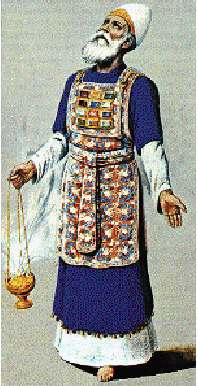 [3] Moreover the representatives in the Jewish Church were of such a nature that there was no thought about the person that represented, but only about the thing represented thereby; as for instance in the case of the Jews, who were by no means celestial men, and yet represented them; and Israel again was by no means a spiritual man, yet represented him; and so it was with Jacob and the rest. The same was the case with the kings and priests, by whom was represented the royalty and holiness of the Lord. This is very evident from the use of inanimate things for representation, as Aaron's garments, the altar itself, the tables for bread, the lamps, the bread and wine, besides oxen, bullocks, goats, sheep, kids, lambs, pigeons, and turtledoves. And because the sons of Judah and Israel only represented the internal and external worship of the Lord's church, and yet more than others made all worship consist in externals, they above all others may be called "Canaan" according to his signification here. [AC1097] [3] Moreover the representatives in the Jewish Church were of such a nature that there was no thought about the person that represented, but only about the thing represented thereby; as for instance in the case of the Jews, who were by no means celestial men, and yet represented them; and Israel again was by no means a spiritual man, yet represented him; and so it was with Jacob and the rest. The same was the case with the kings and priests, by whom was represented the royalty and holiness of the Lord. This is very evident from the use of inanimate things for representation, as Aaron's garments, the altar itself, the tables for bread, the lamps, the bread and wine, besides oxen, bullocks, goats, sheep, kids, lambs, pigeons, and turtledoves. And because the sons of Judah and Israel only represented the internal and external worship of the Lord's church, and yet more than others made all worship consist in externals, they above all others may be called "Canaan" according to his signification here. [AC1097]
That from being idolatrous the church became representative, no one can know unless he knows what a representative is. The things that were represented in the Jewish Church, and in the Word, are the Lord and His kingdom, consequently the celestial things of love, and the spiritual things of faith: these are what were represented, besides many things that pertain to these, such as all things that belong to the church. The representing objects are either persons or things that are in the world or upon the earth; in a word, all things that are objects of the senses, insomuch that there is scarcely any object that cannot be a representative. But it is a general law of representation that there is no reflection upon the person or upon the thing which represents, but only upon that thing itself which is represented.
[2] For example, every king, whoever he was, in Judah and Israel, and even in Egypt and elsewhere, could represent the Lord.
Their royalty itself is what is representative. So that the worst of all kings could represent, such as the Pharaoh who set Joseph over the land of Egypt, Nebuchadnezzar in Babylon (Dan. 2:37-38), Saul, and the other kings of Judah and of Israel, of whatever character they were. The anointing itself-from which they were called Jehovah's anointed-involved this. In like manner all priests, how many soever they were, represented the Lord; the priestly function itself being what is representative; and so in like manner the priests who were evil and impure; because in representatives there is no reflection upon the person, in regard to what his quality is. And not only did men represent, but also beasts, such as all that were offered in sacrifice; the lambs and sheep representing celestial things; the doves and turtledoves, spiritual things; and in like manner the rams, goats, bullocks, and oxen represented lower celestial and spiritual things.
[3] And not only were animate things used as representatives, but also inanimate things, such as the altar and even the stones of the altar, the ark and the tabernacle with all that was in them, and, as everyone may know, the temple with all that was therein, such as the lamps, the breads, and the garments of Aaron. Nor these things only, but also all the rites in the Jewish Church were representative. In the Ancient Churches, representatives extended to all the objects of the senses, to mountains and hills, to valleys, plains, rivers, brooks, fountains, and pools, to groves and trees in general, and to every tree in particular, insomuch that each tree had some definite signification; all which, afterwards, when the significative church had ceased, were made representatives. From all this it may be seen what is meant by representatives. And as things celestial and spiritual-that is-the things of the Lord's kingdom in the heavens, and of the Lord's kingdom on earth could be represented not only by men, whosoever and of what quality soever they were, but also by beasts, and even by inanimate things, it may now be seen what a representative church is.
[4] The representatives were of such an efficacy that all things that were done according to the rites commanded appeared holy before the spirits and angels, as for instance when the high priest washed himself with water, when he ministered clothed in his pontifical garments, when he stood before the burning lights, no matter what kind of man he was, even if most impure, and in his heart an idolater. The case was the same with all the other priests. For, as before said, in representatives the person was not reflected upon, but only the thing itself that was represented, quite abstractly from the person, as it was abstractly from the oxen, the bullocks, and the lambs that were sacrificed, or from the blood that was poured round about the altar, and also abstractly from the altar itself; and so on.
[5] This representative church was instituted-after all internal worship was lost, and when worship had become not only merely external, but also idolatrous-in order that there might be some conjunction of heaven with earth, that is, of the Lord through heaven with man, even after the conjunction by the internal things of worship had perished. But what kind of conjunction this is by representatives alone, shall of the Lord's Divine mercy be told in what follows. Representatives do not begin until the following chapter; in which, and in those that follow, all things in general and in particular are purely representative. Here, the subject treated of is the state of those who were the fathers, before certain of them and their descendants became representative; and it has been shown above that they were in idolatrous worship. [AC1361]
Circumcision was instituted as a sign that the people of the Israelite church belonged to the descendants of Abraham, Isaac and Jacob, as is established by this passage:
God said to Abraham, This is the covenant with me which you are to keep between me and you, and your seed after you: every male among you is to be circumcised; and you are to circumcise the flesh of your foreskin, to be a sign of the covenant between me and you. Gen. 17:9-11.
This covenant, or its sign, was later confirmed by Moses (Lev. 12:1-3). Because this church was distinguished from others by that sign, the Children of Israel were ordered to be circumcised again before crossing the Jordan (Joshua, chapter 5). The reason was that the land of Canaan represented the church, and the river Jordan being brought into it. In addition, so that they should remember that sign when actually in the land of Canaan, they received this order:
When you come into the land and plant any kind of tree for food, you are to regard its fruit as uncircumcised*; for three years it is to be uncircumcised for you, it is not to be eaten. Lev. 19:23.
[2] Circumcision represented and so stood for the rejection of the lusts of the flesh, and thus purification from evils, in much the same way as baptism. This is established from the passages in the Word where it is said that they should circumcise their hearts, as the following:
Moses said, Circumcise the foreskin of your heart, and do not be stiffnecked. Deut. 10:16.
Jehovah God will circumcise your heart and your seed's heart, so that you will love Jehovah your God with all your heart, and with all your soul, so that you may live. Deut. 30:6.
In Jeremiah:
Circumcise yourselves for Jehovah, so that He may take away the foreskins of your hearts, the man of Judah and the inhabitants of Jerusalem, so that my wrath may not go forth like fire on account of the wickedness of your deeds. Jer. 4:4.
In Paul:
In Jesus Christ neither is circumcision of any value, nor is uncircumcision, but faith working through charity, and a new creation. Gal. 5:6; 6:15.
These passages now make it plain that baptism was instituted to take the place of circumcision, because the circumcision of the heart was represented by the circumcision of the flesh; and this too meant purification from evils, for evils of every kind arise from the flesh, and the foreskin means its filthy loves. It is because circumcision and baptismal washing have a similar meaning that it is said in Jeremiah:
Circumcise yourselves for Jehovah, so that He may take away the foreskins of your hearts. Jer. 4:4.
and shortly afterwards:
Wash your heart free from wickedness, Jerusalem, so that you may be saved. Jer. 4:14.
The Lord teaches in Matthew (15:18, 19) what circumcision and the washing of the heart means. [TCR675]
* i.e. forbidden.
Author: EMANUEL. SWEDENBORG (1688-1772)
|
|