|
INSECTS OF THE BIBLE
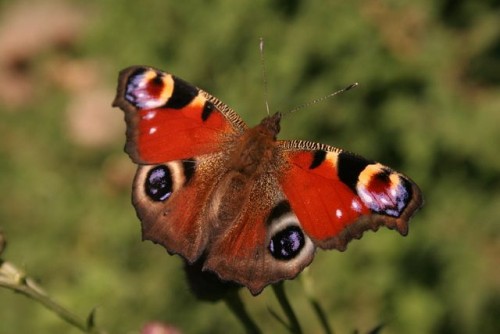 Most insects pass through three stages of life: that of the caterpillar, worm, or maggot; that of the pupa, or chrysalis; and the winged state, like that of flies, butterflies, moths, etc. There are exceptions to this general rule, some of which will be mentioned hereafter. In the first state, the business of their life is eating. They are intent upon gathering, while they may, food from leaves, flowers, wool, putrefying substances or whatever the worms may live on, usually acquiring their full growth during this period, and sometimes storing up all the nourishment they will need in the rest of their lives. Most insects pass through three stages of life: that of the caterpillar, worm, or maggot; that of the pupa, or chrysalis; and the winged state, like that of flies, butterflies, moths, etc. There are exceptions to this general rule, some of which will be mentioned hereafter. In the first state, the business of their life is eating. They are intent upon gathering, while they may, food from leaves, flowers, wool, putrefying substances or whatever the worms may live on, usually acquiring their full growth during this period, and sometimes storing up all the nourishment they will need in the rest of their lives.
The second is a period of more or less complete repose, usually in a cocoon or case, where the formation of wings and other organs of the fully developed insect is rapidly completed. And thus the little creature is prepared to enter upon the third and final state, in which it lives in part upon the wing, feeding upon the nectar of flowers, or some other more delicate food than it had known before, and laying its eggs, sometimes storing with them a considerable supply of provisions for the future young. We have seen in birds, with their quick sight, pleasant voices, or brilliant plumage, and their human sympathy, images of our affections for thinking of human life, and of the spiritual or moral principles relating to that life. The winged insects, likewise, love to fly in the air, yet not in long flights, but from one near object to another, as their changing fancy happens to be attracted. They are forms of thinking, but of mere sensual impressions and pleasures.
In their caterpillar or grub state, they are expressions of desire for the knowledge or impressions of sense from which they may think. The perfect insects represent delights in thinking from appearances, and gathering the pleasures of them. And the chrysalis state represents the intermediate time of assimilation of the impressions acquired and development of the power of enjoying them.
A little child, when first he sees a toy quite new to him, or an unfamiliar face, is not immediately delighted. He is for awhile intent upon observing, examining, and becoming thoroughly acquainted with it; and then, after a time of repose, in which perhaps the object or person is withdrawn or neglected, he will greet it with a laugh, and play with it familiarly. I once saw a large company of poor children brought from crowded quarters in the city for a first play in green fields, among the spring flowers. Instead of the constant expressions of delight which I expected from them, they exhibited an almost greedy eagerness to see, examine, explore, and possess; and they went home almost as seriously and silently as a swarm of caterpillars to their nest. I presume, however, that if they had returned in a few days to the scenes already made familiar, they would have manifested a great deal of enjoyment, and probably they did feel such enjoyment in thinking it over. So almost everybody, in a first visit to an unfamiliar country, as, for instance, to the mountains, from the desire to enjoy it, is at first eagerly intent upon becoming acquainted with it; many persons are much disappointed at their own want of ability to enjoy what they know to be so enjoyable; but after the due steps of development are completed, their power of enjoyment opens its beautiful wings unexpectedly, like a butterfly fresh from his chrysalis case.
In regard to certain kinds of music or painting, for which I had the highest respect, I have several times felt such disappointment at my lack of power of enjoyment, and have not understood that the power of appreciation must first attain its full growth by diligent attention and the acquisition of knowledge; and that the capacity for free enjoyment springs from this as the butterfly from the caterpillar. Of course there must exist the sincere interest in the subject, and desire to appreciate it, like a butterfly’s egg, or no faculty of enjoying will be developed. But if these do exist, they are proof that the faculty may be formed by cultivation.
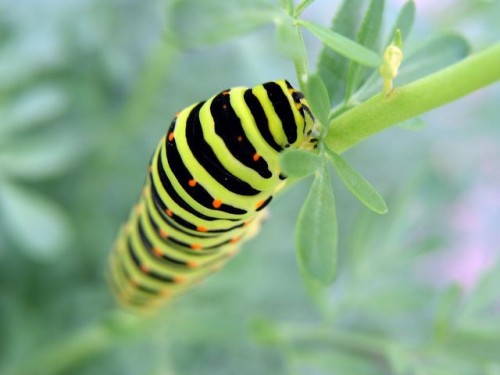 Worms, caterpillars, and the perfect insects serve as food to birds, and also to serpents; because the knowledge of appearances to the senses is food for spiritual thought, and also to the love of sensual pleasure. We observe the worms and butterflies, and our love of observing and learning their ways is like a caterpillar; but the spiritual thought to which we submit our observations is a bird that eats the caterpillar. Our common name, “bookworm,” is rightly applied to one who devours books without caring for any other work or pleasure in life. That the power of thinking, understanding, and enjoying the appearances presented to the senses is represented by insects, is thus taught by Swedenborg: Worms, caterpillars, and the perfect insects serve as food to birds, and also to serpents; because the knowledge of appearances to the senses is food for spiritual thought, and also to the love of sensual pleasure. We observe the worms and butterflies, and our love of observing and learning their ways is like a caterpillar; but the spiritual thought to which we submit our observations is a bird that eats the caterpillar. Our common name, “bookworm,” is rightly applied to one who devours books without caring for any other work or pleasure in life. That the power of thinking, understanding, and enjoying the appearances presented to the senses is represented by insects, is thus taught by Swedenborg:
The animals which walk, and also those which creep, signify affections in each sense, thus goods or evils, for these are of the affections; but the animals which fly, and also the winged insects signify such things as are of the thoughts
in each sense, thus truths or falsities; for these are of the thoughts; . . . hence, winged insects signify like things, but in the extremes of man. (Arcana Coelestia #9331)
Again, he says:
Flying things in the Word all signify things intellectual, and thence truths, and in the opposite sense falsities; but the flying things of the lowest kind, which are insects, signify truths, and in the opposite sense falsities, which are more obscure, as those which belong to the sensual; for those, unless they be illustrated by interior things, are altogether in obscurity and darkness, being next to the body, and thence next to terrestrial things where heavenly things terminate, and are immersed in thick darkness. (Arcana Coelestia #7441)
And once more:
It is not the sensual principle of sight, hearing, smell, taste, and touch which is here meant, for these things are proper to the body; but it is the ultimate or lowest principle of thought and affection, which is first opened with infants, and which is of such a nature that they do not think anything else, nor are affected with any other objects than what make one with the senses above mentioned; for infants learn to think by means of the senses, and to be affected with objects according to the things which have
pleased the senses; wherefore, the first internal principle which is opened to them is the sensual, which is called the ultimate sensual principle of man, and also corporeal sensual; but afterwards, as the infant advances in age, and becomes a boy, the sensual principle is opened more interiorly, from which he thinks naturally, and is also affected naturally; at length, when he becomes a youth and young man, his sensual principle is opened still more interiorly, from which he thinks rationally, and if he is in the good of charity and faith, spiritually, and also is affected rationally and spiritually; this thought and affection is what is called the rational and spiritual man, whereas the former is called the natural man, and the first the sensual man. (Apocalypse Explained #548)
The appearances of life, of which the insects of the mind love to think, are of every kind, from the vilest and most cruel to the delightful loveliness of heaven itself. Happy thoughts of the beautiful appearances of heaven, and of heavenly life on earth, are represented by the beautiful butterflies and moths. Probably the various kinds of heavenly life from which these lovely appearances spring could be traced by careful attention in the characteristics of the butterflies which represent the thoughts of them. Several of these, which perhaps should be ranked as the noblest of the insect race, surround themselves, as they enter the chrysalis state, with cocoons of silk, from which all our supplies of that beautiful material are derived. When caterpillars have attained their full growth, they immediately search for a suitable place for their cocoons, which they spin with impatient zeal, working night and day till they are completed; they then cast their caterpillar skins, and in a state of absolute helplessness, but equally absolute trust, they await their rebirth into their heaven.
Such caterpillars correspond to a love for descriptions of heaven, and of the lovely forms of the life that is from heaven. This love eagerly learns these things from desire to see and enjoy such loveliness. The silken thread with which it clothes itself in its helplessness is from the knowledge it has obtained of the objects of its love, now expressed with trustful hope of being enabled to enjoy them. The moths are delights in the happy things of heaven, and the honey upon which they live is the pleasantness of truth in its first promise of producing good fruit.
That a knowledge of the external lovely things of heaven, with the hope of enjoying them, is represented by silk, is evident from the angels who came to Swedenborg as forms of conjugial love: “They were clad in robes and tunics of shining silk, in which were inwoven flowers most beautiful to the sight” (Conjugial Love #137). And what they described to him was not the spiritual operation and delight of that love in the soul, but the warmth and light, the gardens and the fragrance of their heaven. Such description, from their own knowledge and constant desire, was represented in their silken garments; and the delights of it were still more fully expressed by the flowers inwoven in them.
“Truth from a spiritual origin,” Swedenborg says, is represented by silk; and adds: “This signification it derives from its splendor of light” (Apocalypse Explained #619, 1144). “By silk is signified mediate heavenly good and truth; good from its softness, and truth from its shining” (Apocalypse Revealed #773).
In heaven, they who are in natural truth appear clothed in white, which appears white as if from linen; natural truth itself is also represented there, as if woven of finer threads of linen; those threads appear like silken threads, splendid, beautifully translucent, and soft, and the raiment of them likewise, if the truth which is so represented is from good; but, on the contrary, those threads as of linen do not appear translucent, nor splendid, nor soft, but hard and brittle, and yet white, if the truth so represented be not from good. (Arcana Coelestia #6701)
Author: JOHN WORCESTER 1875
|
|